Why Jebel Ali Port Matters to Global Trade
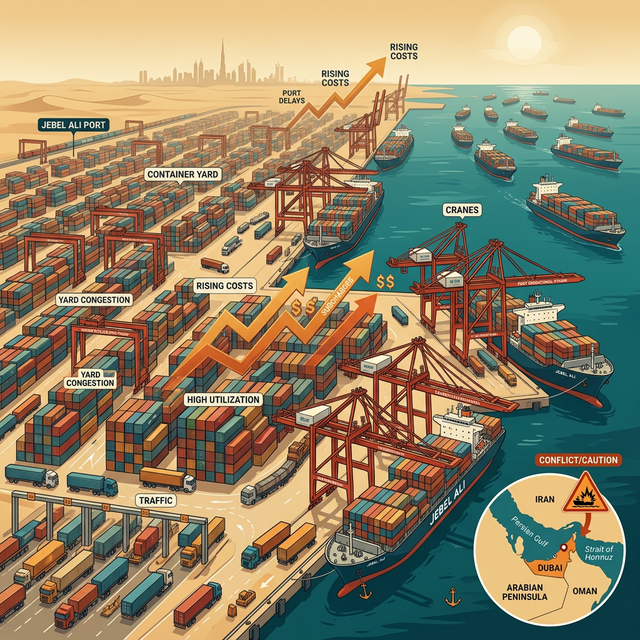
Located in Dubai, Jebel Ali Port is the largest container port in the Middle East and one of the busiest transshipment hubs in the world. It connects shipping routes between Asia, Europe, and Africa while serving as the primary gateway for imports into Gulf economies.
The port plays a central role in supplying goods to markets including the UAE, Saudi Arabia, Qatar, Kuwait, Bahrain, and Oman. Many shipments entering these markets first pass through Jebel Ali before being redistributed to regional ports.
Any operational slowdown or disruption at this port can therefore impact supply chains across the entire Gulf region.
Emergency Conflict Surcharges Are Raising Shipping Costs
Shipping lines operating in the Middle East are now introducing Emergency Conflict Surcharges (ECS) in response to rising geopolitical tensions around the Strait of Hormuz.
Recent surcharge structures reported by major carriers include:
| Container Type | Surcharge (USD) |
|---|---|
| 20-foot dry container | 2,000 |
| 40-foot dry container | 3,000 |
| Reefer or special equipment | 4,000 |
These surcharges apply to shipments moving to or from multiple Gulf markets and surrounding regions.
For exporters, this means freight costs may increase dramatically, particularly for refrigerated cargo or high-volume container shipments.
Which Trade Sectors Are Most Affected?
When logistics disruptions occur in major transshipment hubs, certain sectors experience supply shortages more quickly than others.
Fresh Produce and Food Commodities
Gulf countries import large volumes of fruits, vegetables, processed food products, and agricultural inputs. Because these goods are perishable and require reliable cold-chain logistics, disruptions can quickly lead to supply gaps.
Textiles and Consumer Goods
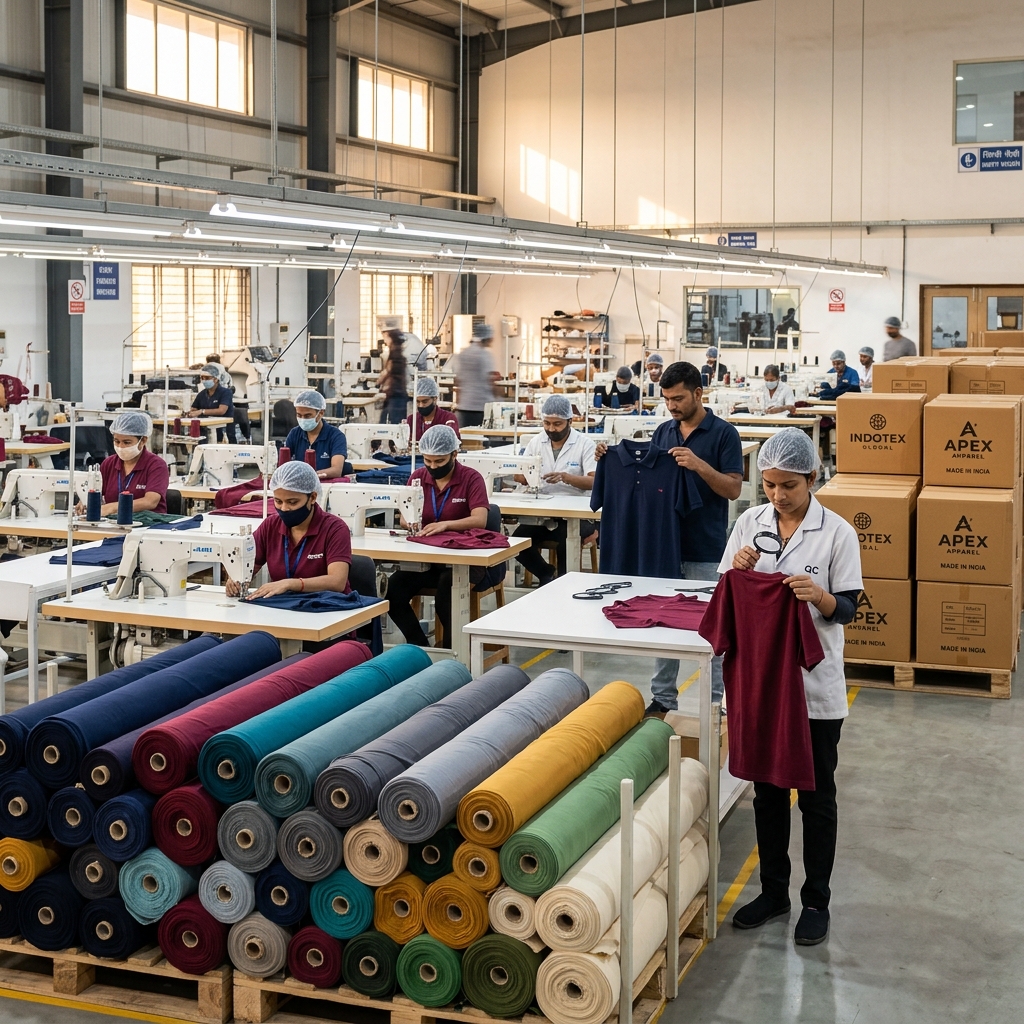
Retail supply chains in the Gulf depend heavily on imports of apparel, textiles, and household products. If container shipments are delayed or rerouted, retailers may face stock shortages during peak demand periods.
Electronics Components and Industrial Inputs
Manufacturers and distributors in Gulf markets also rely on imported electronic components, machinery parts, and industrial materials. Delays in these sectors can affect downstream manufacturing and assembly operations.
Why GCC Importers May Look to Nearby Suppliers
When major logistics hubs experience disruption, importers typically respond by seeking suppliers that offer shorter transit times, reliable shipping routes, and flexible logistics options.
In this context, India becomes an attractive sourcing market for several reasons:
- Geographic proximity to Gulf markets
- Frequent shipping routes to UAE and Saudi ports
- Strong agricultural and manufacturing sectors
- Established trade relationships with GCC buyers
For urgent shipments, some exporters also use air freight routes through Dubai, enabling faster delivery when sea freight becomes unpredictable.
Practical Steps for Exporters Targeting Gulf Markets
Logistics disruptions often create short-term opportunities for exporters who can respond quickly. Businesses targeting GCC markets should consider several practical strategies.
1. Monitor Freight and Insurance Changes
Shipping lines may adjust conflict surcharges, war-risk insurance premiums, and booking availability at short notice. Exporters should stay in close contact with logistics providers to track these developments.
2. Identify Supply Gaps in GCC Markets
Importers in Gulf countries may urgently seek alternative suppliers for products experiencing shortages. Exporters can respond by prioritizing sectors such as fresh produce, packaged food products, textiles, and industrial components.
3. Offer Flexible Shipping Options
In certain cases, combining logistics modes can help maintain delivery schedules. For example, sea freight can handle bulk shipments while air freight serves urgent orders. Providing multiple logistics options can make exporters more attractive to buyers during disruptions.
4. Expand Connections With GCC Importers
Periods of supply instability often lead buyers to explore new sourcing partnerships. Building relationships with distributors, wholesalers, and retailers in Gulf markets can help exporters capture emerging demand.
Taraka International supports this process by helping global buyers identify reliable Indian manufacturers and agricultural suppliers capable of fulfilling export orders during supply disruptions.
Key Takeaways
Disruptions affecting Jebel Ali Port and rising conflict-related shipping surcharges highlight how quickly geopolitical developments can influence global logistics networks.
For importers across the Gulf region, these disruptions may result in delays, higher freight costs, and supply shortages in several key sectors.
For exporters, particularly those based in nearby manufacturing hubs such as India, the situation may create short-term opportunities to supply GCC markets seeking reliable alternatives.
Businesses that respond quickly, monitor logistics developments closely, and maintain flexible sourcing strategies will be better positioned to navigate the evolving trade environment.
Taraka International connects global importers with vetted Indian manufacturers and agricultural producers. Contact our team to explore sourcing options for Gulf markets.