How the Iran-Israel Conflict Is Disrupting Global Shipping
The Strait of Hormuz is one of the most important chokepoints in global trade. More than 25% of the world's seaborne oil and nearly 20% of global LNG supply pass through this narrow corridor between Iran and Oman.
When tensions escalate in this region, global markets react immediately.
The Insurance Risk Zone
Following military escalation involving the United States, Israel, and Iran in early 2026, insurers quickly classified the Gulf region as a high-risk war zone.
Marine insurance decisions are largely coordinated in the London insurance market, where a body called the Joint War Committee maintains a list of high-risk shipping areas.
When the risk designation expands, insurance pricing changes dramatically.
Additional War Risk Premium (AWRP)
Ships entering dangerous zones must pay an Additional War Risk Premium. This premium is typically calculated as a percentage of the ship's insured value.
During the current crisis:
- Insurance costs for Gulf transit increased by about 50%.
- Some voyages became several hundred thousand dollars more expensive.
- In many cases, insurers went further and cancelled coverage entirely.
These cost increases are passed down through the supply chain, ultimately affecting the price of goods at every stage.
Ships Stuck at Sea
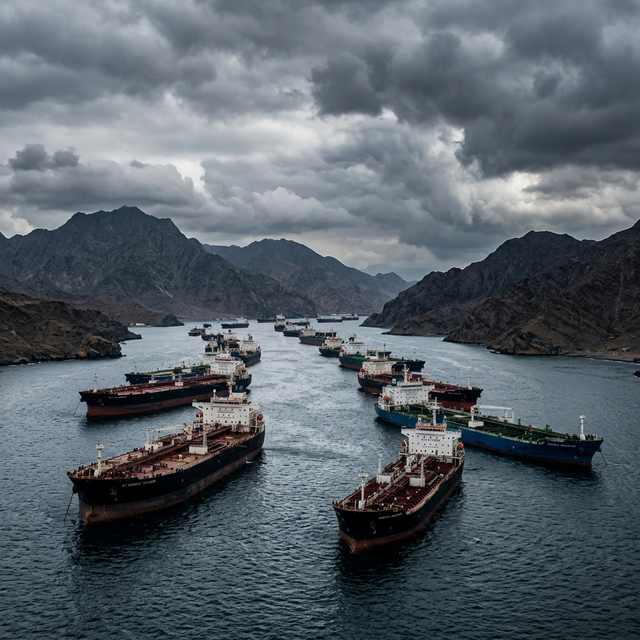
As insurance coverage disappeared, over 200 vessels were forced to anchor near the Strait of Hormuz.
The problem is paradoxical. Ships cannot leave the zone because sailing out also requires insurance coverage through the same dangerous waters.
Without insurance:
- Ports may refuse entry.
- Banks may reject trade financing.
- Other insurance policies may become invalid.
As a result, ships remain stationary, continuing to incur fuel and crew costs while cargo sits idle.
Rising Freight Rates
With fewer ships available for active trade, freight costs have skyrocketed.
Very Large Crude Carriers (VLCCs) traveling to China saw charter rates climb to over $424,000 per day. This increase eventually spreads across the global economy, affecting energy prices, commodity markets, and inflation.
For exporters and importers, this translates into:
- Higher shipping costs per container or per ton.
- Longer delivery timelines due to vessel rerouting.
- Greater difficulty securing reliable logistics capacity.
What This Means for Global Trade
The conflict has demonstrated how geopolitical tensions can quickly disrupt shipping through insurance markets. A single regional crisis can ripple across global trade networks within days.
Key takeaways for trade professionals:
- Monitor war risk designations. The Joint War Committee's listed areas directly affect insurance costs and vessel availability.
- Build flexible logistics plans. Having relationships with freight forwarders who operate across multiple corridors reduces vulnerability during regional disruptions.
- Diversify sourcing. Businesses relying on Gulf-region supply chains should explore alternative supplier markets to maintain continuity.
Conclusion
The Iran-Israel conflict has shown that shipping disruptions are not only caused by physical blockades or attacks. Insurance market reactions alone can halt trade by making voyages financially unviable.
Exporters and importers who proactively manage their supply chain exposure are better positioned to navigate these challenges.
Taraka International helps global importers diversify their sourcing through verified Indian manufacturers across FMCG, agriculture, and industrial products. Contact our team to discuss your supply chain resilience strategy.