Food Export Requirements by Country: Which Markets Require Which Certifications?
A definitive global certification matrix mapping food export regulations and mandatory compliance across North America, Europe, Australia, GCC, and Asia.
Table of Contents (34 sections)↓
- At a Glance
- 1. The Global Compliance Pyramid
- Layer 1: Statutory Government Requirements
- Layer 2: Food Safety and Hygiene Standards
- Layer 3: Retail and Commercial Benchmarks
- Layer 4: Demographic and Market-Specific Mandates
- Why Understanding the Layers Matters
- 2. Global Regulatory Ecosystem Mapping
- 3. Destination Market Certification Matrix
- United States
- European Union
- United Kingdom
- Australia & New Zealand
- GCC (Saudi Arabia, UAE, Qatar)
- ASEAN (Singapore, Malaysia, Indonesia)
- 4. The Global Certification Expansion Roadmap
- 5. Factory-to-Retail Journey & Buyer Verification
- Frequently Asked Questions
- Which food export certifications are recognized globally across all major markets?
- What are the specific US FDA requirements for Indian food manufacturers?
- How do EU food safety regulations differ from US FDA standards?
- What certifications are mandatory for exporting packaged foods to the GCC region?
- Do UK food import rules differ from EU regulations post-Brexit?
- What is the FCE/SID requirement for exporting canned or bottled foods to the United States?
- How can a brand design a single production facility to satisfy FDA, EU, and FSANZ standards simultaneously?
- What are the penalties for non-compliance when entering European food markets?
- Are Halal certifications issued in India recognized in Saudi Arabia and the UAE?
- How long does destination-market regulatory registration typically take for new food products?
- What role does GFSI benchmarking play in international retail acceptance?
- How does Taraka help brands navigate country-specific certification matrices?
- Sources & References
- Global Regulatory Agencies
- Global Food Safety Bodies
- Trade & International Logistics Resources
A Comprehensive Global Certification Matrix for Multi-Market Food Exporters and Importers
At a Glance
| Target Region | Primary Regulatory Body | Mandatory Border Clearances | Key Market Entry Thresholds |
|---|---|---|---|
| United States | FDA / USDA | FDA Facility Reg, FSVP Importer | Direct USDA NOP (Organic), PCQI Plan |
| European Union | EFSA / DG SANTE | TRACES NT, BCP Inspection | Strict MRLs (ETO/Aflatoxins), NPOP Equivalence |
| United Kingdom | FSA / DEFRA | IPAFFS Pre-Notification | BRCGS Issue 9 (Gold Standard for Retail) |
| Australia / NZ | DAFF / MPI / FSANZ | IFIS Clearance / MPI Registration | Biosecurity Holds, PEAL Allergen Bolding |
| GCC (Saudi, UAE, Qatar) | SFDA / MOIAT / MOPH | GHEX / Zabeel Registration | Accredited Halal Mandatory, Zero Trans-Fat |
| ASEAN (Singapore, Malaysia) | SFA / FSQD (MOH) | TradeNet Permit / FoSIM Reg | JAKIM Halal (Malaysia), Unapproved Additives |
For food importers, procurement managers, and export teams, expanding consumer food brands across international borders presents a recurring operational challenge. A manufacturing facility certified for one region may find its shipments detained, re-labeled, or rejected entirely when entering another.
This friction does not happen because food safety standards are contradictory. Rather, it exists because food import compliance operates under two separate systems: statutory border control laws enforced by government agencies, and commercial vendor standards enforced by retail buyers.
When importing food from India, one of the world's largest food exporters, understanding country-specific regulations is the difference between consistent supply chain execution and expensive port detentions. A certification stack designed for the United Kingdom will not automatically satisfy biosecurity laws in Australia, nor will a domestic permit in India satisfy importer of record liability under United States law.
To build an efficient multi-market sourcing strategy, buyers must understand how food export requirements by country, retail expectations, and demographic requirements intersect across key global markets.
The Global Compliance Pyramid
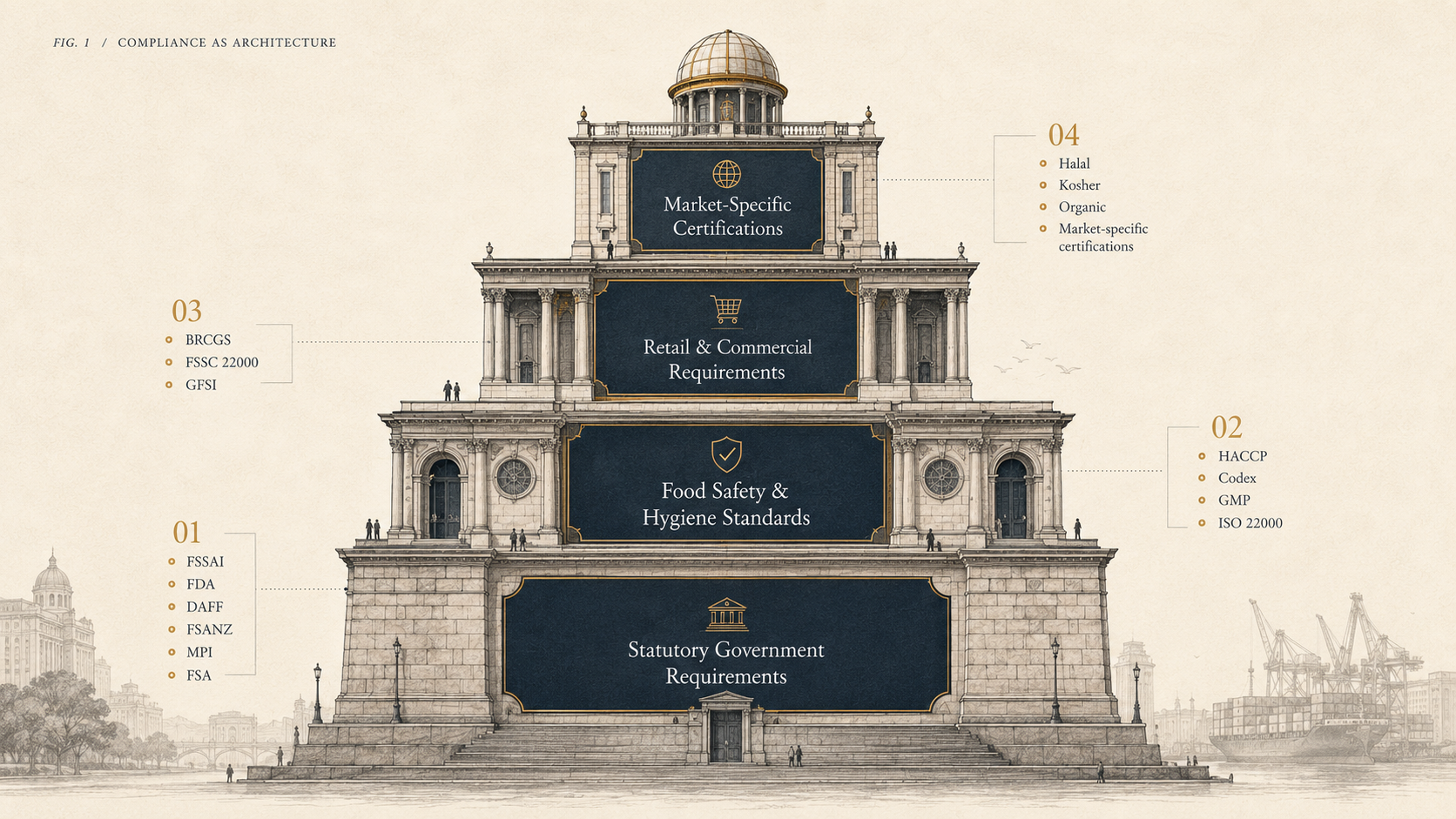
Before evaluating individual countries, importers and exporters need a clear framework for global food regulation. Across every major jurisdiction, food import compliance is structured into four progressive layers.
Figure 1.0: The Four Progressive Layers of Global Food Compliance
Layer 1: Statutory Government Requirements
These requirements are mandated by sovereign federal authorities and border control agencies, such as the US FDA, Australia's DAFF, or the UK Food Standards Agency. Layer 1 compliance is legally non-negotiable. It governs importer registration, facility registration, statutory health certificates, customs entry documentation, and border biosecurity clearance. Importing food without Layer 1 compliance is illegal and leads to immediate customs seizure or container destruction.
Layer 2: Food Safety and Hygiene Standards
These standards are governed by international benchmarking organizations and statutory food safety authorities, such as Codex Alimentarius, FSSAI, or FSANZ. Layer 2 mandates fundamental hazard controls, hazard analysis critical control point (HACCP) protocols, process water testing, and facility hygiene. It establishes the baseline operational safety of the manufacturing facility.
Layer 3: Retail and Commercial Benchmarks
These benchmarks are enforced by commercial buyers, supermarket chains, including Woolworths, Tesco, Walmart, and Carrefour, and multinational brand owners. Layer 3 mandates third-party food safety certification benchmarked by the Global Food Safety Initiative (GFSI), primarily BRCGS certification (Issue 9) and FSSC 22000 (Version 6). While not always legally required by government border inspectors, Layer 3 is commercially required for vendor onboarding in mainstream retail channels.
Layer 4: Demographic and Market-Specific Mandates
These requirements are requested by specific consumer segments, religious authorities, or organic regulatory frameworks. Layer 4 includes accredited Halal certification for GCC, Malaysian, and Indonesian markets, Kosher certification for North American and Israeli retail, and certified organic equivalence such as NPOP, USDA Organic, or EU Organic.
Why Understanding the Layers Matters
A common mistake in international procurement is attempting to substitute higher-layer commercial credentials for lower-layer statutory requirements. A factory holding an exemplary BRCGS Grade AA+ audit certificate cannot clear border customs if its government FSSAI export licence or statutory health documentation is invalid. Compliance must always be built sequentially from Layer 1 through Layer 4.
Global Regulatory Ecosystem Mapping
The global food regulatory ecosystem is vast and varies drastically by region. From the heavily audited and strict biosecurity environments of Oceania to the MRL-focused and centralized framework of the European Union, successful market entry depends on intimate knowledge of the regional gatekeepers.
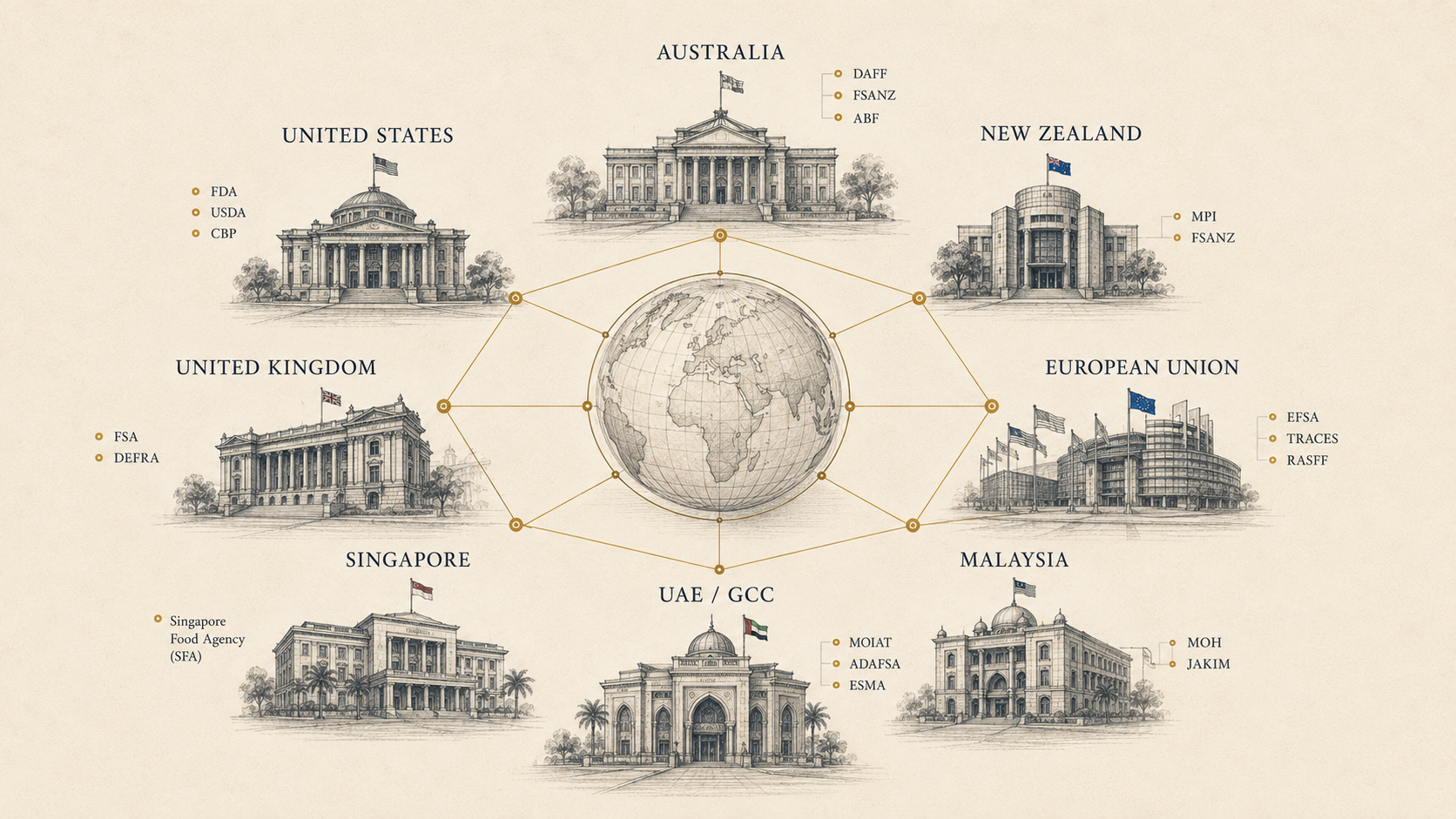
Figure 2.0: Major International Regulatory Authorities and Ecosystem Dynamics
Understanding the core mandates of the US FDA, EFSA in the EU, the UK FSA, FSANZ in Oceania, SFDA in Saudi Arabia, UAE MoIAT, and Singapore SFA reveals the specific structural priorities of each destination market. Some regions prioritize strict port entry declarations, while others rely on heavy domestic supply-chain verification obligations placed on the Importer of Record.
Destination Market Certification Matrix
United States
The United States represents the world's largest single-country food import market. Its regulatory model places statutory legal liability directly on the US Importer of Record to verify foreign facility compliance. Government Authorities:* US FDA, USDA (FSIS & APHIS), US Customs and Border Protection (CBP). Mandatory Requirements:* FDA Facility Registration, US Agent Designation, Prior Notice of Imported Foods, and FSVP Compliance (Foreign Supplier Verification Program) where the US Importer is legally required to verify that foreign suppliers meet US safety standards. Buyer Expectations:* Full compliance with FDA Preventive Controls for Human Food rules, documented Food Safety Plans supervised by a Preventive Controls Qualified Individual (PCQI). FCE/SID is critical for Acidified Foods. Certifications:* SQF, BRCGS Issue 9, FSSC 22000. USDA NOP for organic (Indian NPOP is not directly recognized).
European Union
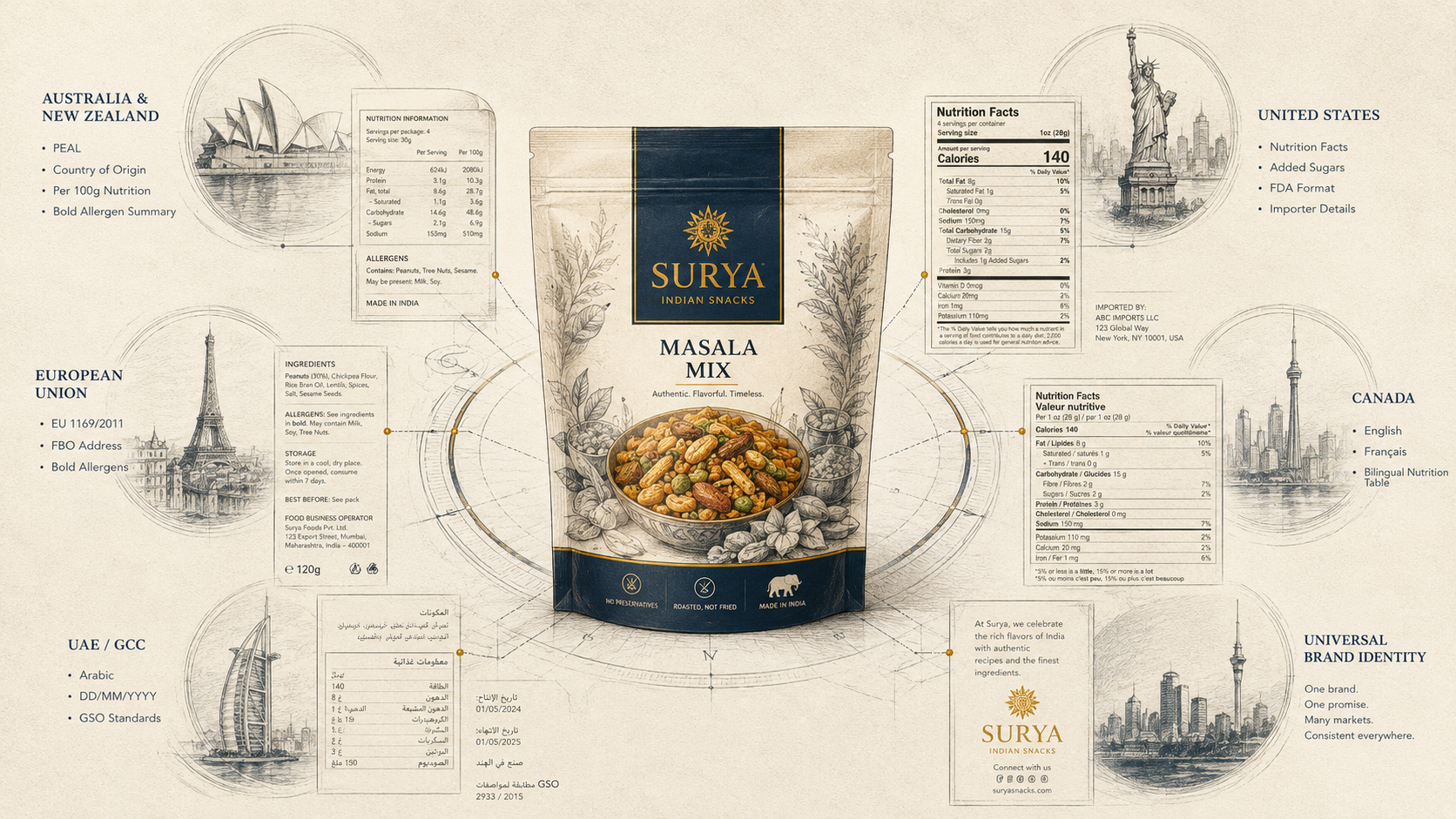
The European Union operates a single food safety market spanning 27 member states. It enforces some of the world's lowest maximum residue limits (MRLs) for pesticides, heavy metals, and mycotoxins. Government Authorities:* EFSA, European Commission (DG SANTE), National Food Inspection Agencies. Mandatory Requirements:* Pre-notification via TRACES NT system. High-risk foods require mandatory official controls, increased physical inspections, and Official Certificates accompanied by accredited analytical test results (RASFF Compliance). Strict CE/Food Contact Material rules apply. Buyer Expectations:* Compliance with Regulation (EU) No 1169/2011, requiring multilingual labeling, bold allergen highlighting, and precise nutritional declarations. Certifications:* FSSC 22000 (v6), BRCGS, IFS Food.
United Kingdom
Following its departure from the European Union, the United Kingdom enforces its own independent food safety and customs regime, introducing distinct health certification and border check requirements for imported food. Government Authorities:* Food Standards Agency (FSA), DEFRA, Food Standards Scotland. Mandatory Requirements:* High and Medium risk foods require pre-notification via IPAFFS and statutory Export Health Certificates under the UK Border Target Operating Model (BTOM). Compliance with UK REACH is required for certain products. Buyer Expectations:* Strict adherence to UK Food Information Regulations (FIR), supply chain transparency, and ethical trade compliance. Certifications:* BRCGS Issue 9 (originating from the British Retail Consortium) is the dominant standard.
Australia & New Zealand
Australia maintains one of the strictest biosecurity and food safety inspection frameworks in the world, while New Zealand shares a joint food standards code with Australia via FSANZ but administers its own distinct border biosecurity and importer registration framework. Government Authorities:* DAFF (Australia), MPI (New Zealand), FSANZ, Australian Border Force. Mandatory Requirements:* Under the Imported Food Inspection Scheme (IFIS), food imports face strict border testing. DAFF Biosecurity clearance is required in Australia. MPI Importer Registration is mandatory in New Zealand. Buyer Expectations:* Strict compliance with Plain English Allergen Labelling (PEAL) mandates and Country of Origin Labelling (CoOL). Certifications:* BRCGS Issue 9, FSSC 22000.
GCC (Saudi Arabia, UAE, Qatar)
The GCC region balances rapid logistics with strict Halal and statutory product registration oversight. Government Authorities:* SFDA (Saudi Arabia), MOIAT (UAE), MOPH (Qatar). Mandatory Requirements:* SFDA Registration and GHEX portal entry (Saudi Arabia), Zabeel/FIRS Registration (Dubai/UAE), Watheq system registration (Qatar). All require official import permits prior to arrival. Buyer Expectations:* GSO Standards compliance, mandatory Arabic ingredient labeling, strict formatting for production and expiry dates, zero tolerance for non-permitted artificial additives, and zero trans-fats (Saudi Arabia). Certifications:* FSSC 22000, ISO 22000. Accredited Halal Certification (SFDA Halal Center, MOIAT, or MOPH approved) is completely mandatory.
ASEAN (Singapore, Malaysia, Indonesia)
Government Authorities:* SFA (Singapore), FSQD (MOH) and JAKIM (Malaysia), BPOM (Indonesia). Mandatory Requirements:* SFA Import Permit via TradeNet (Singapore). FoSIM Registration and MAQIS inspection (Malaysia). BPOM registration for Indonesia. Buyer Expectations:* Adherence to strict pesticide residue limits and permitted food additives in Singapore. Full ingredient disclosure in Bahasa Malaysia or English in Malaysia. Certifications:* FSSC 22000, BRCGS. Halal Certification (JAKIM or BPJPH recognized) is a critical statutory and commercial requirement in Malaysia and Indonesia.
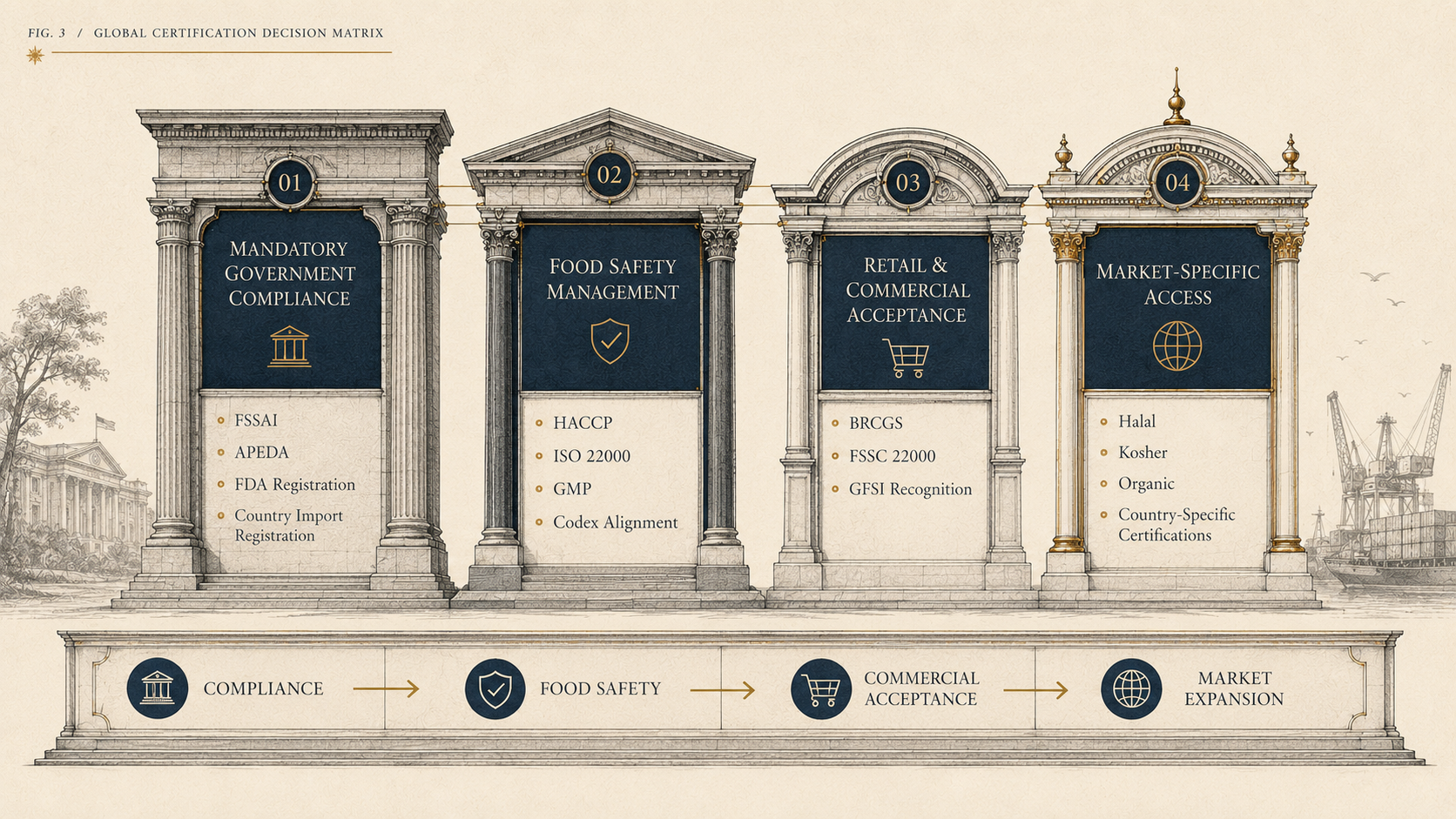
Figure 3.0: Certification Decision Matrix by Destination Region
The Global Certification Expansion Roadmap
When expanding consumer food brands into multiple international regions, attempting to secure every country-specific certification individually creates exponential operational complexity and auditing costs.
Instead, sophisticated exporters build a Multi-Market Certification Strategy based on regulatory convergence. By identifying certifications that satisfy the highest common denominator of international standards, companies can access multiple global regions simultaneously with a single core compliance architecture.
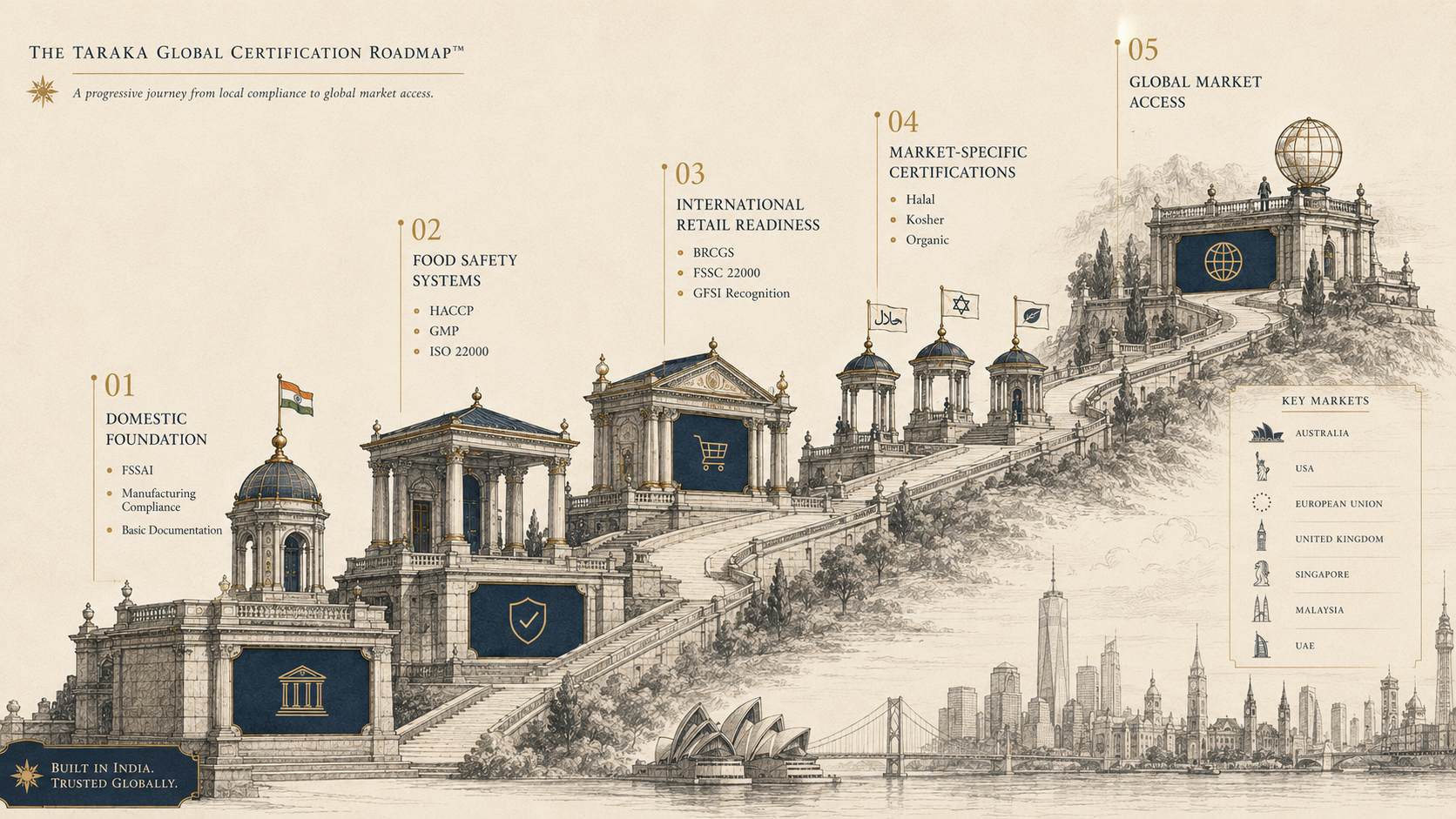
Figure 4.0: Global Certification Expansion Roadmap for Multi-Market Distribution
How brands scale efficiently:
Factory-to-Retail Journey & Buyer Verification
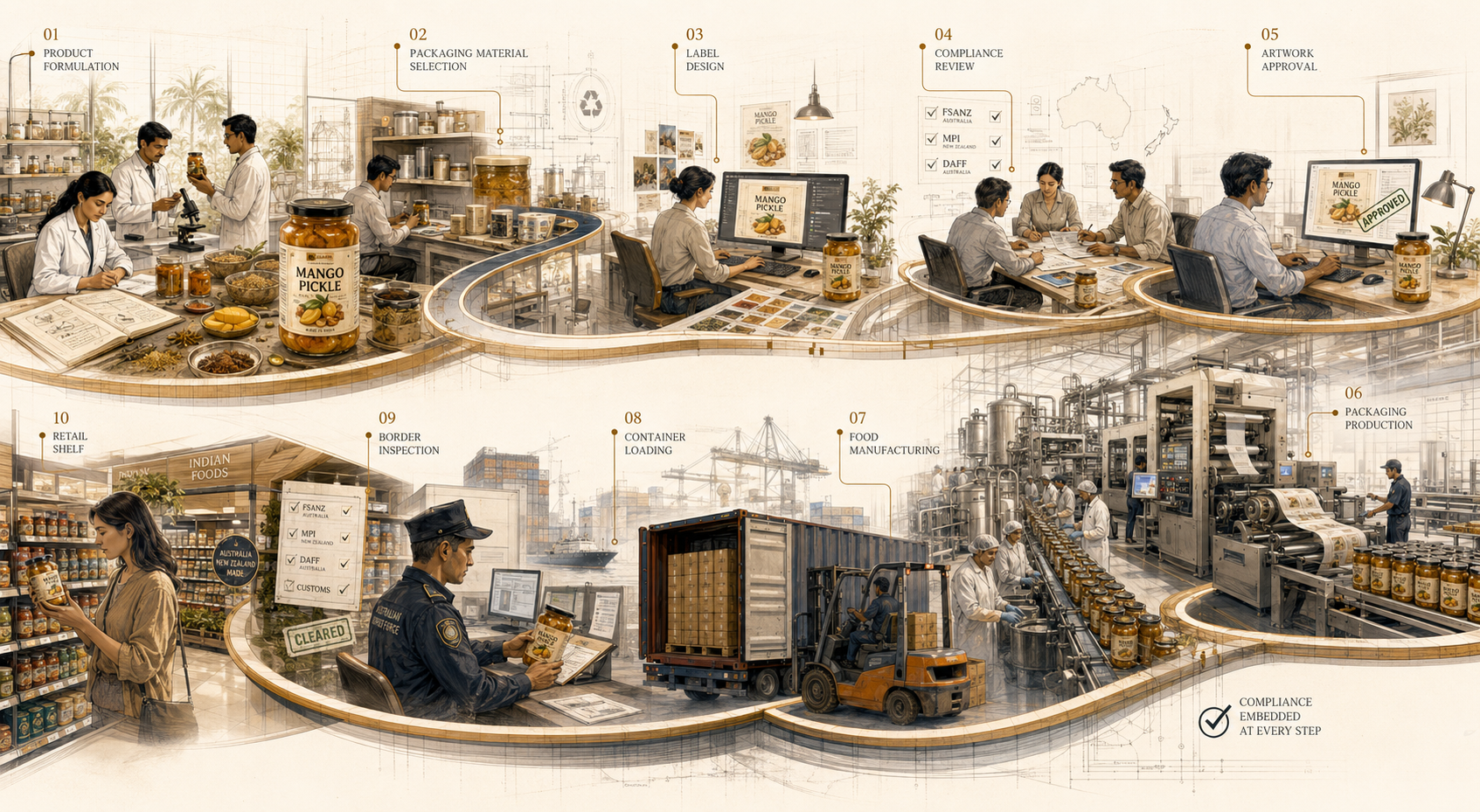
To execute a compliant, efficient international food supply chain, procurement managers and export teams must apply a rigorous operational checklist from the factory floor to the international retail shelf. This involves statutory baseline integrity, GFSI operational hygiene, demographic accreditation depth, and digital regulatory system integration.

Figure 5.0: The End-to-End Factory to International Retail Compliance Journey
Before any shipment leaves the port, buyers must verify the exact credentials of the supplier. A factory might hold ISO 22000, but if it lacks a valid FSSAI Central Exporter License or its Halal certifier is not recognized by the destination country's authorities, the shipment will fail at customs.

Figure 6.0: The Structured Buyer Verification Framework for Supplier Onboarding