A Complete Guide to Food Export Certifications
A comprehensive breakdown of mandatory and voluntary food export certifications for Indian manufacturers and global food procurement teams.
Table of Contents (26 sections)↓
- At a Glance
- 1. The Export Certification Landscape
- 2. The 3-Tier Certification Architecture
- Tier 1: Mandatory Government Export Licenses (FSSAI Export, APEDA, RCMC)
- Tier 2: Plant Safety & Quality Management Systems (HACCP, ISO 22000, FSSC 22000, BRCGS)
- Tier 3: Voluntary & Destination Market Certifications (Halal, Kosher, Organic, Non-GMO, US FDA FCE/SID)
- 3. The 6-Point Supplier Certification Audit Protocol
- 4. Global Regulatory Ecosystem: Who Does What
- 5. Certification Maintenance & Audit Readiness
- Frequently Asked Questions
- What is the difference between an FSSAI domestic license and an FSSAI export license?
- Is ISO 22000 mandatory for exporting packaged food from India?
- How do buyers verify whether a supplier's HACCP certification is issued by an accredited body?
- What certifications are required to export organic food products from India?
- Which food safety certifications are most widely recognized by European and US supermarkets?
- How long does it take for an Indian food manufacturer to achieve FSSC 22000 accreditation?
- What happens if an export certification expires while a shipment is in transit?
- Are third-party lab test reports required for every export batch?
- What is the role of APEDA registration in food export compliance?
- How do voluntary certifications like Halal and Kosher expand global market reach?
- What common fraudulent practices exist in food export certification, and how can buyers spot them?
- How does Taraka verify supplier certification authenticity?
- Sources & References
- Indian Export & Regulatory Authorities
- Global Accreditation & Food Safety Schemes
- International Import Regulatory Bodies
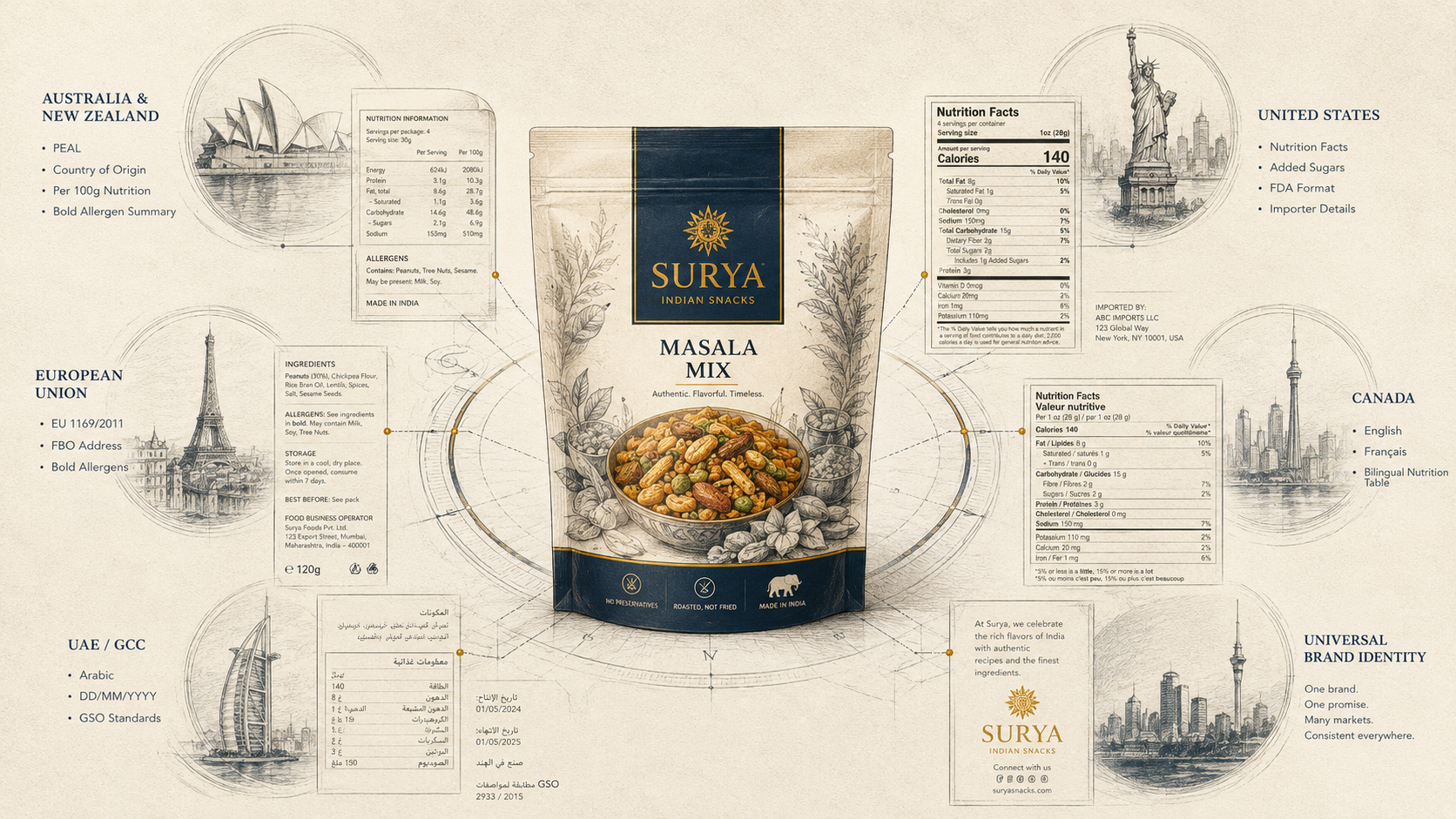
Understanding Mandatory, Quality System, and Market-Specific Food Export Certification Frameworks

Figure 1.0: A Complete Guide to Food Export Certifications
At a Glance
| Certification Tier | Purpose | Examples |
|---|---|---|
| Tier 1: Mandatory Export Licenses | Statutory government permission required to export food legally. | FSSAI Central (Exporter), APEDA RCMC, MPEDA, Spices Board |
| Tier 2: Plant Safety & Quality Management | Facility-level process validation ensuring hygienic manufacturing and hazard control. | HACCP, ISO 22000, FSSC 22000, BRCGS |
| Tier 3: Market-Specific & Voluntary | Product-specific standards gaining access to religious, dietary, or demographic markets. | Halal, Kosher, NPOP/USDA Organic, Non-GMO, US FDA FCE/SID |
The Export Certification Landscape
Navigating international food trade requires strict adherence to multiple overlapping layers of regulatory and quality compliance. For Indian food manufacturers aiming to supply global retail chains, and for international procurement teams evaluating Indian suppliers, understanding the certification landscape is the first critical step toward mitigating import rejection risks. Certificates act as verifiable proof that a supplier maintains robust food safety protocols, adheres to statutory export laws, and controls operational hazards.
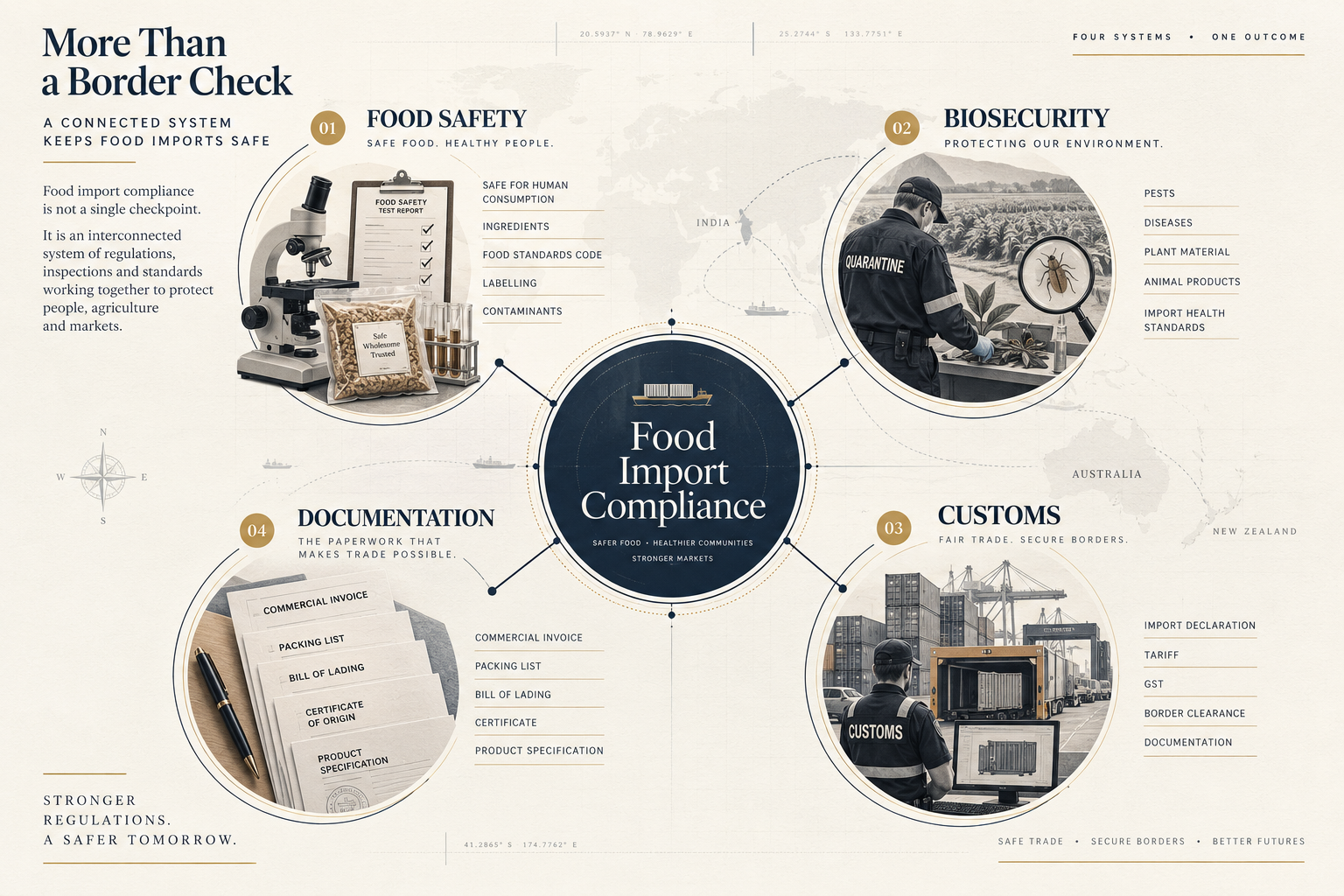
Figure 2.0: The core pillars of food import compliance and certification
The 3-Tier Certification Architecture
Tier 1: Mandatory Government Export Licenses (FSSAI Export, APEDA, RCMC)
Before a single shipment leaves an Indian port, the exporting entity must secure mandatory statutory licenses. The Food Safety and Standards Authority of India (FSSAI) mandates that all food exporters obtain an FSSAI Central License specifically categorized for "Export". In addition, exporters must hold a valid Registration-Cum-Membership Certificate (RCMC) from the relevant commodity board - such as APEDA (Agricultural and Processed Food Products Export Development Authority), the Spices Board, or MPEDA (Marine Products Export Development Authority) - which governs the specific product category.
Tier 2: Plant Safety & Quality Management Systems (HACCP, ISO 22000, FSSC 22000, BRCGS)
While government licenses permit export, commercial buyers demand proof of operational safety. This tier focuses on process validation and hazard control. Foundational systems like Hazard Analysis Critical Control Point (HACCP) and ISO 22000 establish basic management frameworks. However, to access tier-1 global supermarkets, suppliers must achieve Global Food Safety Initiative (GFSI) benchmarked standards, such as FSSC 22000 or BRCGS. These advanced certifications mandate rigorous Pre-Requisite Programs (PRPs), environmental monitoring, and stringent supplier approval protocols.
Tier 3: Voluntary & Destination Market Certifications (Halal, Kosher, Organic, Non-GMO, US FDA FCE/SID)
The final tier involves product-specific certifications tailored to target demographics and regional statutory requirements. Entering the GCC requires Halal certification accredited by bodies like MOIAT or JAKIM. Accessing the US market for low-acid canned foods necessitates US FDA Food Canning Establishment (FCE) and Submission Identifier (SID) registrations. In addition, premium organic markets demand compliance with specific equivalence agreements, such as the NPOP (India) for European markets or direct USDA NOP certification for the United States.
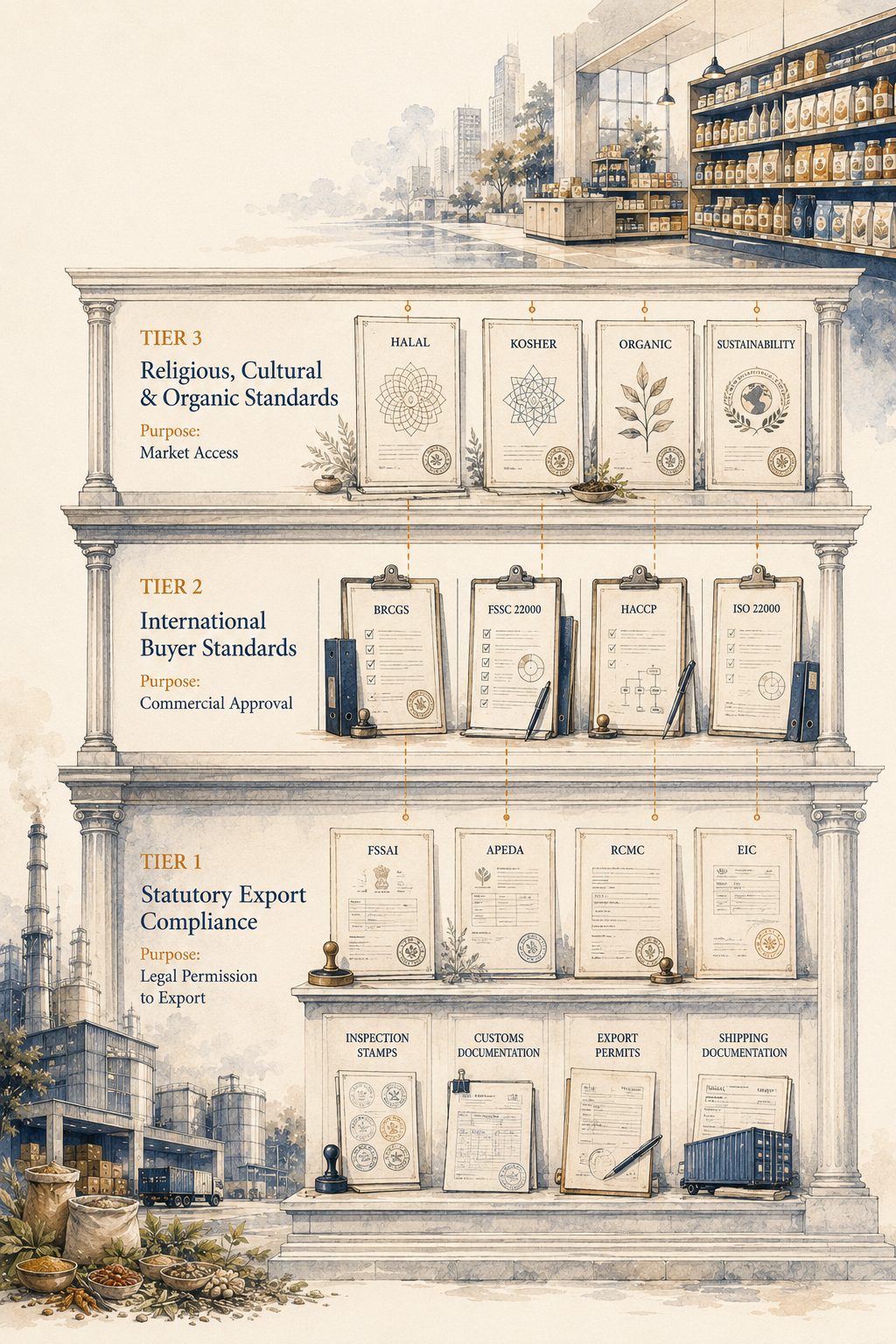
Figure 3.0: The 3-Tier Certification Architecture: Mandatory vs Quality vs Commercial
| Certification Tier | Issuing Authorities | Audit Frequency | Market Scope |
|---|---|---|---|
| Tier 1: Mandatory Export Licenses | FSSAI, APEDA, DGFT | Annual / Bi-annual statutory renewal | Universal Baseline (All Indian Exports) |
| Tier 2: GFSI / Plant Safety | Third-party registrars (SGS, Intertek) | Annual independent site audits | Global Supermarkets & Multinational CPG Buyers |
| Tier 3: Market-Specific | Accredited certifiers (USDA, JAKIM, OU) | Annual compliance verification | Region-Specific (USA, EU, GCC) & Dietary Markets |
The 6-Point Supplier Certification Audit Protocol
Evaluating paper certificates requires digital verification and operational testing. International procurement teams must execute comprehensive credential checks before finalizing vendor contracts.

Figure 4.0: 6-Point Supplier Audit Protocol for Vendor Qualification
Follow this verification protocol to audit any supplier digitally:
Global Regulatory Ecosystem: Who Does What
Understanding the roles of global regulatory bodies is essential for maintaining seamless export operations. Different agencies govern specific regional safety frameworks, dictating compliance requirements for incoming shipments.

Figure 5.0: The Global Regulatory Ecosystem and Competent Authorities
- FSSAI (India): The statutory authority overseeing all domestic manufacturing and mandatory export licensing.
- US FDA (United States): Enforces the Food Safety Modernization Act (FSMA), requiring Foreign Supplier Verification Programs (FSVP) and facility registration.
- FSANZ (Australia & New Zealand): Develops the bi-national Food Standards Code regulating compositional requirements, labelling, and contaminants.
- EFSA (European Union): The European Food Safety Authority dictates scientific risk assessments, setting stringent Maximum Residue Limits (MRLs) for pesticides.
- Gulf Accreditation Centre (GCC): Harmonizes standards across Middle Eastern nations, managing Halal accreditation alongside the GSO.
Certification Maintenance & Audit Readiness
Securing certifications is only the initial hurdle; maintaining compliance demands continuous institutional vigilance. Certificates frequently require annual renewals and carry specific conditions regarding unannounced audits. Exporters must implement robust document control systems to track expiration dates for both their own facility licenses and those of their raw material suppliers.
Failing to renew a Tier 1 mandatory license or allowing a GFSI certification to lapse can result in immediate customs rejection at the destination port. Procurement teams must integrate automated compliance tracking into their vendor management systems to ensure that all required documentation remains active throughout the commercial contract lifecycle. Proactive internal audits and mock traceability drills are critical tools for ensuring perpetual audit readiness.